Forthcoming
A two session mini course on Friday 27/11/2026 10:00-10:50 and 11:10-12:00, @P3.10 & online.
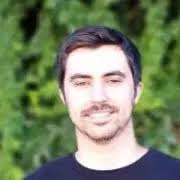
Francisco Berkemeier, University of Cambridge
Fourier neural operators for understanding DNA replication
Faithful DNA replication is essential for genome stability and cell division. Predicting when and where it fails under perturbation or therapy is central to understanding genome instability and identifying vulnerabilities in cancer. The interplay of molecular processes that govern replication makes this a challenging predictive problem, motivating approaches that combine mathematical modelling with machine learning. Across two sessions, I will introduce mathematical models of DNA replication kinetics, linking stochastic origin initiation and fork progression to coupled transport equations. I will then explore how scientific machine learning, particularly Fourier neural operators, can accelerate the repeated model evaluations required to investigate perturbations and infer replication mechanisms from experimental data. Finally, I will discuss how multimodal approaches can integrate genomic sequence, chromatin accessibility, transcription and replication measurements to connect molecular context with replication dynamics. Combining these complementary data with mechanistic models offers opportunities to distinguish competing biological explanations, anticipate responses to perturbations and generate testable hypotheses about replication failure and treatment sensitivity.


Home
Mathematics for Artificial Intelligence is a series of seminars and lectures aimed primarily at mathematicians willing to contribute to mathematical challenges in the area of Artificial Intelligence.